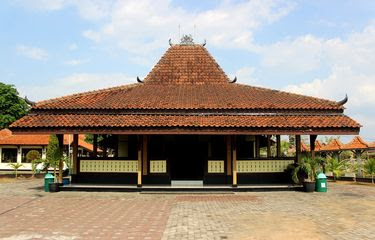
Results for ancient joglo house


Lesung is a traditional tool used in rice processing by communities in Southeast Asia, particularly in Indonesia and Malaysia. It is a large, flat, circular stone that is used to pound or pound and winnow rice. Lesung is an essential tool in the traditional process of preparing rice for consumption, and it has a significant cultural and social importance in these communities.


Lesung is typically made of stone, such as granite or basalt, and it is designed to be sturdy and durable. The size of lesung can vary, but it is usually around 1-2 meters in diameter and 30-40 centimeters in height. Lesung is used in conjunction with a wooden or bamboo pestle, which is called a “batu giling” in Indonesia and a “batu lesung” in Malaysia.


The traditional process of rice processing using lesung begins with the harvest of the rice plants. The harvested rice is threshed to remove the grains from the stalks and then cleaned to remove any debris or impurities. The cleaned rice is then poured onto the lesung and pounded with the pestle to remove the husk and chaff from the grain. This process is called “menguli” in Indonesia and “memukul” in Malaysia.

After pounding, the grain and husk are separated using a winnowing basket, a process called


ARIF BLOG 11:59 AM
Read more ...

The Yogyakarta Palace Golden Train is a ceremonial procession used by the Sultan of Yogyakarta, one of the few remaining traditional monarchies in Indonesia. 


The train, which is comprised of a series of luxurious carriages and is richly decorated with gold, is used to carry the Sultan and his entourage during important religious and cultural events.


The history of the Yogyakarta Palace Golden Train can be traced back to the mid-19th century, during the reign of Sultan Hamengkubuwono III. At that time, the Sultan saw the need to modernize the transportation used by the royal court and commissioned the creation of a series of carriages that would be used for ceremonial purposes.


The carriages were designed and built by local craftsmen using traditional techniques, and were heavily decorated with gold, silver, and precious stones. The train quickly became an important symbol of the Sultan's power and prestige, and was used to great effect in ceremonial processions throughout the kingdom.


Over the years, the Yogyakarta Palace Golden Train has undergone numerous renovations and upgrades, with new carriages added and existing ones modified to reflect the changing needs of the royal court. Despite these changes, however, the train has remained an important symbol of the Sultanate, and is widely regarded as one of the most magnificent and historically significant cultural treasures in Indonesia.


The Yogyakarta Palace Golden Train is used during a variety of important events and festivals, including religious ceremonies, weddings, and state visits. During these events, the train is typically accompanied by a procession of musicians, dancers, and other performers, creating a spectacular display of color, sound, and movement.


One of the most significant uses of the Yogyakarta Palace Golden Train is during the celebration of the Sultan's birthday, which takes place each year on the 10th of June. During this event, the train is used to carry the Sultan and his entourage through the streets of Yogyakarta, accompanied by a procession of musicians and dancers.


Another important event during which the Yogyakarta Palace Golden Train is used is the commemoration of the sultan's coronation, which takes place every seven years. During this event, the train is used to carry the Sultan and his family to the nearby Prambanan Temple, where they participate in a series of religious ceremonies.


The Yogyakarta Palace Golden Train is also used for more practical purposes, such as transporting the Sultan to and from important meetings and diplomatic events. Despite its ceremonial role, however, the train remains an important symbol of the Sultan's power and prestige, and is widely respected and admired by the people of Yogyakarta.


Over the years, the Yogyakarta Palace Golden Train has faced numerous challenges, including the threat of theft and damage from natural disasters such as earthquakes and floods. Despite these challenges, however, the train has remained a cherished cultural treasure, and continues to be used and cherished by the people of Yogyakarta.


In recent years, there has been a growing interest in preserving and promoting the Yogyakarta Palace Golden Train, both within Indonesia and internationally. Many museums and cultural centers now showcase collections of the train, and exhibitions and festivals dedicated to the art and culture of Yogyakarta are held regularly in Indonesia and around the world.


In conclusion, the Yogyakarta Palace Golden Train is an important part of Indonesia's cultural heritage, reflecting the rich traditions and artistic ingenuity of the people of Yogyakarta. Whether viewed as a symbol of power and prestige or a work of art, the Yogyakarta Palace Golden Train remains an enduring legacy of Indonesian culture and a testament to the importance of

ARIF BLOG 9:33 AM
Read more ...

The Joglo house is a traditional Indonesian architectural style originating from the Javanese people of Central Java. Joglo houses are known for their large and spacious main halls, or "ruang utama," which are supported by tall, carved wooden pillars. The style is characterized by its intricate wooden carvings, soaring rooflines, and use of natural materials such as teak wood and thatched roofs.


Historical joglo type articles

Old Joglo house style with sacred carvings


The origins of the Joglo house can be traced back to the Mataram Kingdom of Central Java, which flourished between the 16th and 18th centuries. During this period, Javanese nobles and royalty built large, elaborate homes, many of which were designed in the Joglo style. These homes reflected the prosperity and cultural sophistication of the kingdom, and were designed to showcase the wealth and status of their owners.


Joglo houses were not just a symbol of prestige and wealth, but also played an important role in Javanese culture and daily life. The large main hall was used for communal gatherings and ceremonies, such as weddings, religious celebrations, and other important events. The intricate carvings and decorations on the columns and rooflines were also believed to hold spiritual significance, imbuing the house with a sense of protection and good fortune.


One of the most distinctive features of the Joglo house is its large, open-air central hall. This central space is often surrounded by smaller rooms and balconies, creating a sense of flow and connection between the interior and exterior of the home. The roof is supported by tall wooden pillars, which are often carved with intricate designs and patterns.


Joglo houses were traditionally constructed using locally-sourced materials, such as teak wood for the columns and roof, and bamboo for the walls and flooring. This use of natural materials helped to create a sense of connection to the surrounding environment and to local building traditions. The roofs were also typically thatched with local grasses, which provided insulation and helped to keep the interior cool in the tropical climate.


Despite its popularity, the Joglo style faced challenges during the colonial period, when many traditional homes were destroyed or modified to conform to Western architectural styles. However, in the post-independence era, there was a resurgence of interest in traditional Javanese architecture, and many Joglo houses were restored or rebuilt.


Today, the Joglo house continues to be an important part of Javanese cultural heritage, with many examples still standing in villages and cities across Java. The style is also being revived in contemporary architecture, with many modern homes incorporating elements of the Joglo design in their construction.


In addition to its cultural significance, the Joglo house is also recognized for its environmental sustainability. The use of natural materials and traditional building techniques helps to reduce energy consumption and minimize the environmental impact of the building. This makes the Joglo house a model for sustainable architecture and a symbol of the enduring importance of traditional building practices.


In recent years, there has been a growing interest in preserving and promoting the Joglo style among tourists and visitors to Indonesia. Many Joglo houses have been converted into museums, hotels, and cultural centers, allowing visitors to experience the beauty and cultural significance of the Joglo style.


In conclusion, the Joglo house is an important part of Javanese cultural heritage, reflecting the richness of the island's architectural traditions and the ingenuity of its people. Whether viewed as a symbol of prestige and wealth or a model for sustainable architecture, the Joglo house remains an enduring legacy of Indonesian culture and a testament to the importance of preserving traditional building practices

ARIF BLOG 9:13 AM
Read more ...
on this occasion I will give you some knowledge about joglo and joglo history. because joglo have menpunyai myths and cultural values ​​are very thick and has a value of its own magical.

Joglo a traditional architectural building java, joglo have framework comprising the main building of the pillar in the form of the four main pillars supporting the building structure as well as intercrop be an array of beams that supported the pillar.

The composition of the room at Joglo generally divided into three parts, namely the meeting called pendhapa room, living room or space that used to hold a puppet show called pringgitan, and a back room called royal or omah jero as a family room. In this space there are three senthong (room) is senthong left, middle and senthong senthong right.


Occurs application of the principle of hierarchy in the pattern of spatial arrangement. Each room has a different value, the front of the room are general (public) and the rear of a special nature (personal / private). Uniquely, each room from the terrace, the pavilion to the rear (pawon and pekiwan) not only function but also loaded with elements of Javanese philosophy of life. The element of religion / belief in god embodied by the space cult of Dewi Sri (the goddess of fertility and happiness of the household) in accordance with the people's livelihood Java (peasant-agrarian). The room is called krobongan, the rooms are always empty, but complete with beds, mattresses, pillows and bolsters, and can also be used for the first night for the newlyweds (Widayat, 2004: 7). Krobongan a special space created as a tribute to Dewi Sri who is considered a very important role in all aspects of community life of Java.
So in the space mapping Joglo house there are three main space map are:

• Hall
• Pringgitan, and
• Dalem


The pavilion is located at the front, and do not have a wall or open, it relates to the philosophy of the Javanese were always being friendly, open and did not choose in terms of receiving guests. In general, given the pavilion no table or chairs, just given a mat when guests come, so that between the guest and the homeless have equality and also in terms of conversations or chat felt familiar pillars (pillars Agawe santosa).
pringgitan
Pringgitan has a conceptual meaning is the place to show themselves as a symbol of the owner of the house that he is only a shadow or a puppet of Dewi Sri (the goddess of rice) which is the source of all life, fertility, and happiness (Hidayatun, 1999: 39). According Rahmanu Widayat (2004: 5), pringgitan is the space between pendhapa and the palace as a place for a puppet show (ringgit), are performing ceremonial ruwatan for children sukerta (children who fall prey Bathara Kala, the god giant ensuing).

Dalem (Main Room)
Dalem or joglo main room of a home owner's personal space. In the main room of this palace there are some parts of the living room and several rooms or called senthong. In olden times, the room or senthong only made three rooms only, and designated rooms even this works only into three: the first room for sleeping or resting male both rooms were empty but still filled bed or divan complete with bedding, and the third reserved bed or rest women.

Rooms were second or middle commonly referred to krobongan is a place to store heritage and the worship of Goddess Sri. Senthong middle or krobongan the most sacred places / private for the residents.

Inside the palace or stored krobongan meaningful treasures unseen and the first harvests of rice, Dewi Sri is also regarded as an owner and hostess truth. In the krobongan there are beds, mattresses, pillows and bolsters, is the room the first night for the newlyweds, it is interpreted as a cosmic event of unification Dewa Kamajaya with Dewi Kama Ratih the gods love romance marriage (Mangunwijaya, 1992: 108). In the house aristocratic Javanese traditions Yogyakarta, senthong middle or krobongan contains an assortment of objects emblem (equipment) that have a unitary sense of the sacred (holy). Various objects emblem is different from the objects emblem farmers. But both have the meaning of a symbol of fertility, happiness households manifestations
is Dewi Sri
ARIF BLOG 11:32 PM
Read more ...
1 set Joglo derived from the Holy Ancient - Central Java, complete with Overlapping Sari. joglo is indeed very old at all because the quality of ancient teak wood is certainly very strong quality and anti-termite. because the wood of old hardwood and wood belonging to the anti rayap.Terbuat of solid teak and has a carving style Overlapping Ghost on her Sari. with distinctive carving style homes sacred genuine then this joglo Quote anyak hunted in demand for unique items, especially lovers of old houses with carved joglo very beautiful. This joglo house with a size approximately:
Left-Right approximately 4 meters
Front-Rear of approximately 2 meters
Large Pillar pillar approximately 13-14 cm.
This can be joglo functioned as Hall in front of the house, a place to relax in the backyard or poolside.

Privilege one set of Joglo this is already included:
1. A set of antique Gebyok width of 5 meters and height of 2.48 meters
2. 1 set of old rickshaw seat
3. 1 piece of teak wood antique sideboard
4. 1 piece Hanging Lamp made ​​of Brass
5. A pair of Gupolo Guard Statue is made of stone
ARIF BLOG 10:39 PM
Read more ...
this time I will post about the antique chandelier that is very popular with chicken motifs masters, with a green lampshade porcelen.This lamp is old much-loved despite its age but the condition is not inferior to the current model, two lamps are antique carved chicken masters who make us shake his head because he saw the uniqueness of these lights.The main privilege of this lamp adalah.Lampu roosters are very popular among fans of antique chandelier because it is now quite old but old langka.

Walaupun light conditions are still very good and intact. The form is antique make these lights can also be used as an attractive decorative element perhatian.dapat into a collection of antiques lovers, do not think the price is cheaper even with the lights of the old stuff but the price is quite expensive lights.
ARIF BLOG 10:13 PM
Read more ...
the old houses and antiques are from jepara.mungkin indeed only one who knows the value of artistic who would buy this house. wood from this house are very strong that termites tisdak want to eat the wood ini.karena did in ancient times the wood for the house was very choice,
ARIF BLOG 3:41 PM
Read more ...
Joglo house which was founded in 1835 is a witness to the history of the struggle of the Indonesian nation. The days of its establishment, a more prominent function is as a place of discussion of state issues and devise strategies against the Dutch. At the second clash in Yogyakarta, became the headquarters of the army of students (TP), all under the command of Captain Jogjakarta Martono (Transmigration Minister during the reign of President Suharto). Joglo Kelor is the best joglo a Sleman regency. This can be seen from parts of a more complete and pristine. In the view of metaphysics, joglo house has a spiritual energy that can be felt within a radius of ± 100 meters. Officially, Joglo Kelor become a tourist attraction in october 2002. Some time ago, a bike (used by Captain Martono) and Hanging Lights (which is used for lighting in meetings TP), on the move from Joglo to Vredeburg.
ARIF BLOG 3:21 PM
Read more ...